
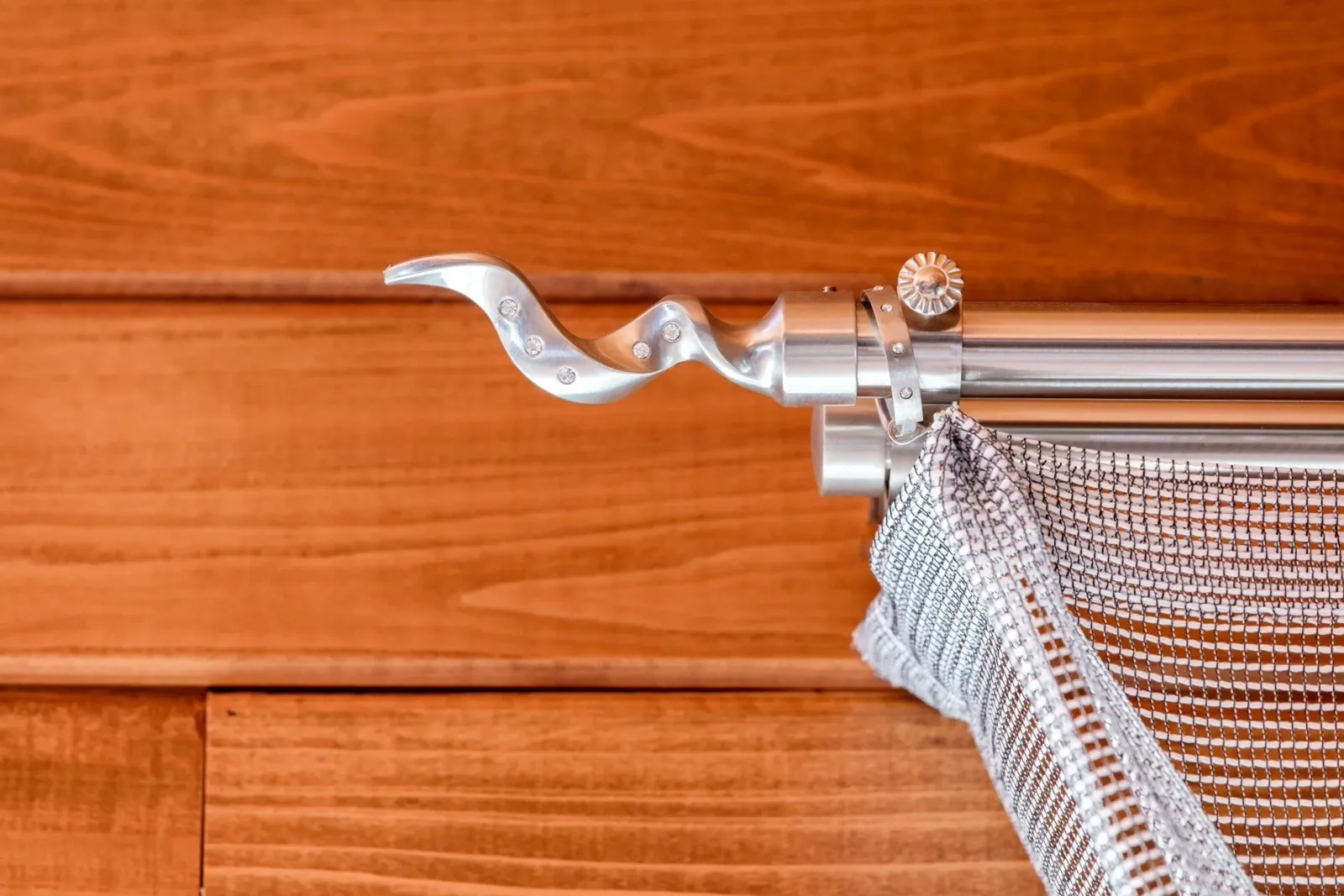
Hardware is the part of a window treatment nobody notices when it is right and everyone notices when it is wrong. A beautiful drapery panel on an undersized rod that sags in the middle, or pulls out of the wall after a year, undoes all the work that went into the fabric. The rod, track, bracket, and finial are what carry the weight, set the proportion, and let the panels move, and getting them right is as much a part of the job as the sewing. We supply and install custom drapery hardware as part of the full window treatments service we have run from our St. Petersburg workroom since 2000.
Verified Local Business
Two Google profiles. One St. Pete team you can verify.
29 combined five-star Google reviews across both profiles. Licensed, insured, and running our own St. Pete workroom since 2000.
5001 4th St N, St. Petersburg
Our main location at 5001 4th St N, St. Petersburg, FL 33703. Window treatments, wallpaper, and upholstery from one St. Pete studio. We still come to you for the in-home consultation.
View on Google Visit Our StudioWest St. Pete Location
A second verified Google profile for our West St. Petersburg studio at 3026 Central Ave Ste 551, St. Petersburg, FL 33712.
View on Google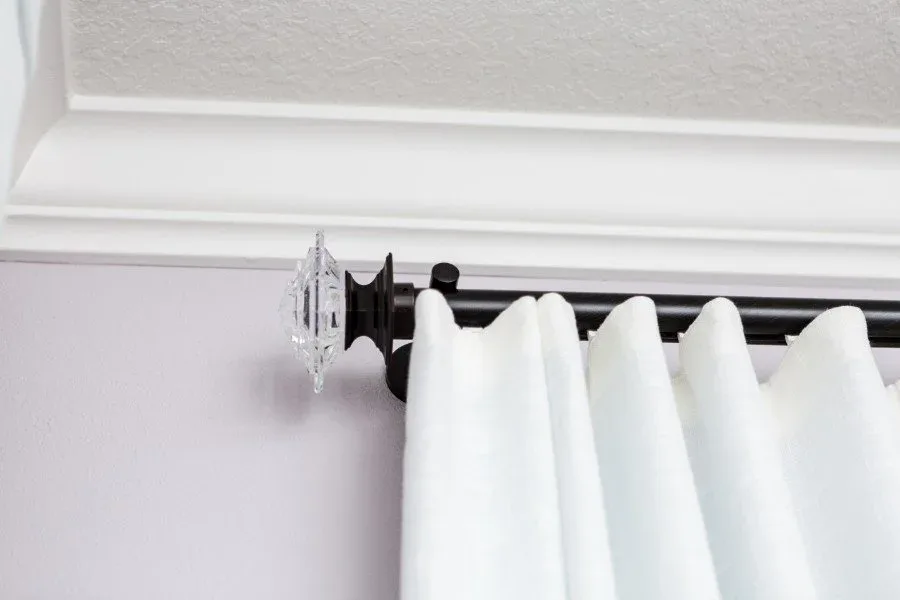
Why Drapery Hardware Deserves Real Attention
In St. Petersburg the stakes are higher than in most markets, because the walls themselves fight you. Concrete-block construction, hollow interior walls, vaulted ceilings, and impact-window framing all demand the right anchor in the right spot, and a heavy lined panel will find every shortcut a careless installer took. Beyond the engineering, hardware sets the proportion of the whole treatment: mount a rod too low or too narrow and even gorgeous custom drapery looks cramped; mount it high and wide and the same panels make the window and the room feel larger.
Sized to carry the load: Rods, tracks, and brackets specified for the weight of your panels and the width of the span, so nothing sags or pulls free.
Anchored for Florida walls: The right fasteners for concrete block, hollow walls, vaulted ceilings, and impact-window framing.
Matched to the architecture: Finishes and finials chosen to suit the home, from Craftsman bungalow to coastal modern condo.
Installed by our own crew: Measured, mounted, and leveled by the team that hung it, not left in a box for a handyman.
The Drapery Hardware We Supply and Install
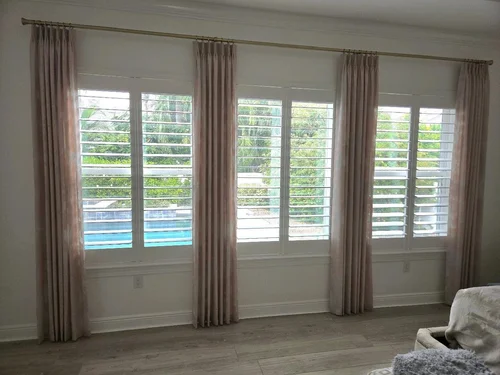
Different treatments call for different systems, and part of the consultation is matching the hardware to both the look and the way you will use the window. If you are searching for drapery near me in the St. Pete area, this is the in-house team that handles it:
- Decorative curtain rods. Meant to be seen, with finials, rings, and brackets that are part of the design. The classic choice for pinch-pleat and grommet drapery.
- Wood curtain rods. Stained or painted to match trim and furniture, warm and traditional, and a favorite in older St. Pete homes.
- Wrought and bent iron rods. Ornamental iron for a classic, rustic, or Mediterranean look, and the right answer for bay and bow windows where the rod must follow the curve.
- Concealed and ceiling-mounted tracks. Hidden systems for floor-to-ceiling drapery, sliding doors, and modern flat-panel looks where you want the fabric to read as a clean wall of cloth.
- Traverse rods and cord systems. Mechanisms that glide panels open and closed smoothly, ideal for wide spans and daily use.
- Cafe rods and tension systems. Smaller-scale hardware for kitchens, bathrooms, and cafe-height treatments.
- Motorized tracks and rods. Remote-, app-, and voice-controlled systems for tall windows and heavy panels, the same motors we use on motorized shades.
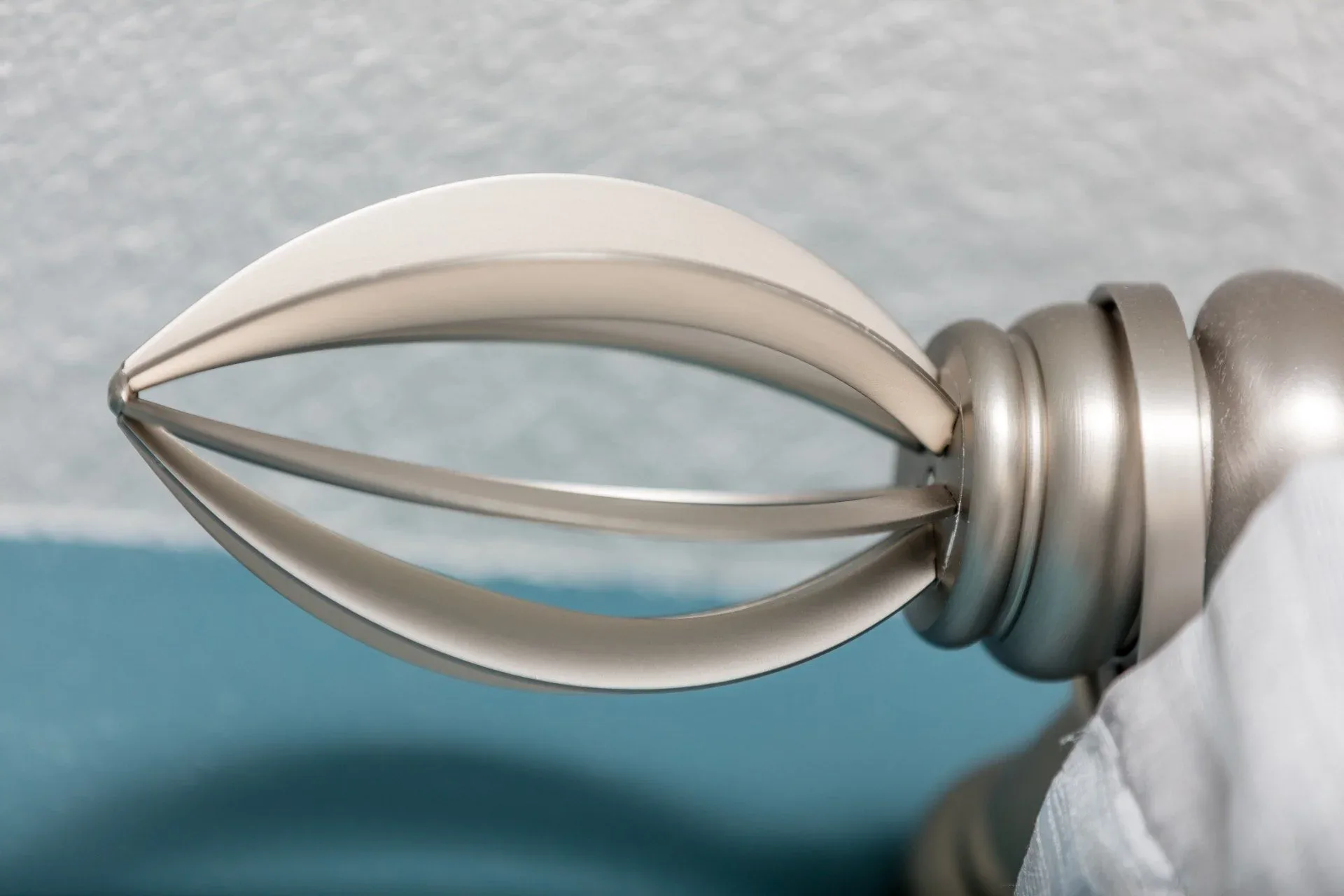
- Finials, rings, brackets, and tiebacks. The finishing details that make a treatment look considered rather than assembled.
Finishes and Materials That Fit the Home
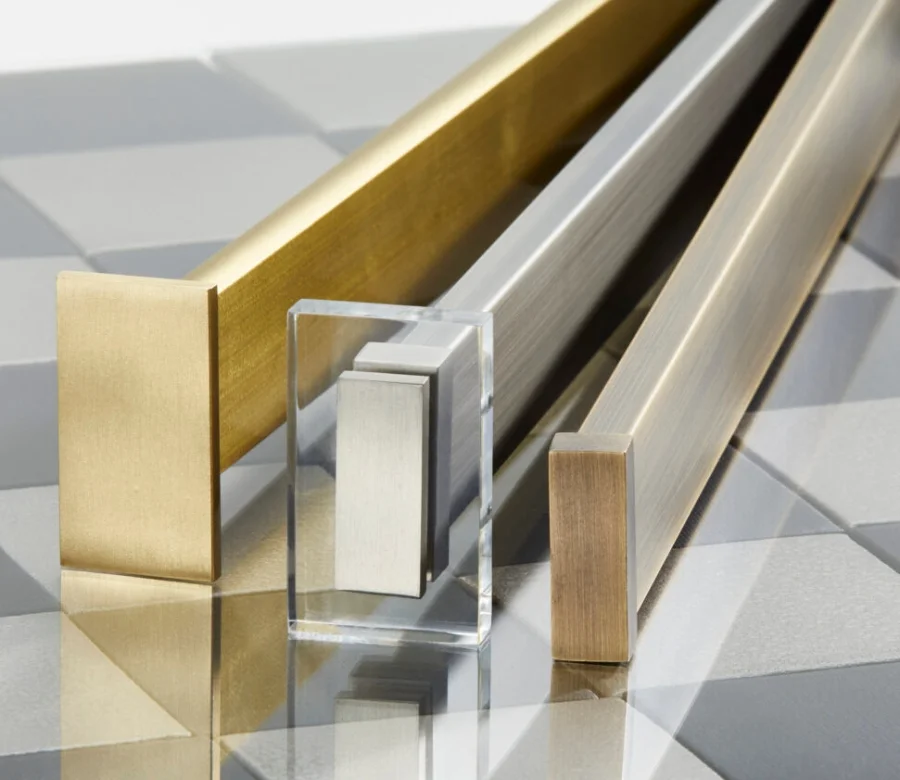
Hardware is jewelry for the window, so the finish matters as much as the function. We offer wood in a wide range of stains and painted colors, wrought and hand-finished iron for traditional and rustic rooms, and brushed, matte-black, and polished metals for modern interiors. The goal is always coordination: the rod should relate to the door hardware, the lighting, and the trim, not float on its own. When a project also includes cornices or valances or hard treatments like plantation shutters or custom blinds, we make sure the hardware ties the whole window together rather than competing with it.
Installation: The Part That Actually Matters
Anyone can sell a rod; hanging it so it carries a wall of lined fabric for years is the real service, and in Florida it is genuinely technical work. Concrete block needs the correct anchors set at the correct depth. Hollow walls need blocking or toggle systems rated for the load. Vaulted and tray ceilings change the geometry of where a bracket can go. Impact windows and their deep framing limit your mounting points. Our installers solve these problems every day, which is why our hardware stays level and secure long after a big-box bracket would have torn loose. We measure for the specific wall and ceiling condition, place the hardware for the best proportion, and level and load-test it before we call the job done. The same care goes into our commercial window treatments for offices and hospitality spaces across the bay.
Bay Windows, Sliders, and Specialty Spans
The windows that need custom hardware most are the ones a stock kit cannot handle. Bay and bow windows require rods bent or jointed to the exact angles so panels travel cleanly around the curve. Sliding glass doors need a track and stack arrangement that clears the doorway when open, often paired with our outdoor window shades on the lanai side. Two-story and great-room windows call for heavy-duty systems and usually motorization, since nobody wants to operate a twelve-foot panel by hand. Corner windows need hardware that turns the corner without an awkward gap. These are fabrication-and-engineering problems, and they are exactly what an in-house workroom is built to solve.
Our In-House Workroom & Local Install Team
Because we sew drapery and run our own workroom in West St. Petersburg, hardware is never an afterthought bolted on at the end. We plan the rod or track with the panel, so the heading style, the ring size, and the stack-back all work together, and the same team that builds your custom bedding and recovers your furniture coordinates the finishes across the room. One team plans it, one team installs it, and one team stands behind it. You can see finished projects in our gallery and read the story behind the studio on our about page.
Custom Hardware vs. the Big-Box Kit
A store-bought rod kit is cheap and immediate, and for a light, narrow window it can be fine. On anything heavier or wider, the limits show fast: undersized rods bow in the middle, included brackets are not rated for lined panels, finishes are limited, and the anchors that come in the package were not made for concrete block. Custom hardware is specified for your panels and your walls, in the finish you actually want, and installed by people who do it for a living. For a treatment meant to last a decade or more, it is the difference between hardware you forget about and hardware you are constantly re-tightening. If you are still weighing your options, our St. Pete window treatment guides walk through how the pieces fit together.
Read more verified reviews from local homeowners on our reviews page before you book.
How the Process Works
- Free in-home consultation. We look at the windows, the walls, and the drapery plan, and bring finish samples so you can choose in your own light. We serve homeowners throughout the Tampa Bay area and offer the same consultation across every neighborhood we cover.
- Measurement and specification. We size the hardware to your panels and span and plan the mount for your specific wall or ceiling condition.
- Order and coordination. Hardware is ordered to match your drapery timeline so everything arrives and installs together.
- Professional installation. Anchored, leveled, and load-tested, with operation confirmed before we finish.
When you are ready, request your consultation and we will find a time that works.
Drapery Hardware Across St. Petersburg & Tampa Bay
We supply and install drapery hardware throughout St. Petersburg, West St. Pete, Downtown St. Pete, Snell Isle, Old Northeast, Shore Acres, Tierra Verde, Clearwater, and Seminole, plus the Tampa side of the bay. For larger projects we travel across most of the Tampa Bay and Gulf Coast region.
Ready for hardware that carries the load and looks the part?
Call (727) 914-5410 or request your free in-home consultation. We are available by appointment, evenings and weekends included.